
DPDP Rules 2025 Explained: Turning Data Privacy into a Core Business Capability

Author name:

Naveen Kumar Geddha
Vice President – Data & AI27.01.2026
Reading Time:
7 Minutes

In today’s digital economy, trust is no longer an abstract idea. It is shaped through every interaction, when data is shared, accessed, stored, and used. Each of these moments quietly influences how individuals perceive an organization’s intent and credibility. Organizations that handle personal data with clarity and care tend to build stronger relationships, deliver consistent experiences, and create conditions for sustainable growth.
The DPDP Rules 2025 arrive at a defining point in this evolution. They provide a clear framework for embedding responsibility into everyday operations, enabling organizations to move from ad-hoc data practices toward more intentional, trust-led digital design. In doing so, they signal a broader maturity in how data is governed, shifting the focus from isolated decisions to coherence, purpose, and long-term value creation.
This shift is also being shaped by scale. As organizations digitize faster, data volumes expand, ecosystems deepen, and decisions become increasingly automated.
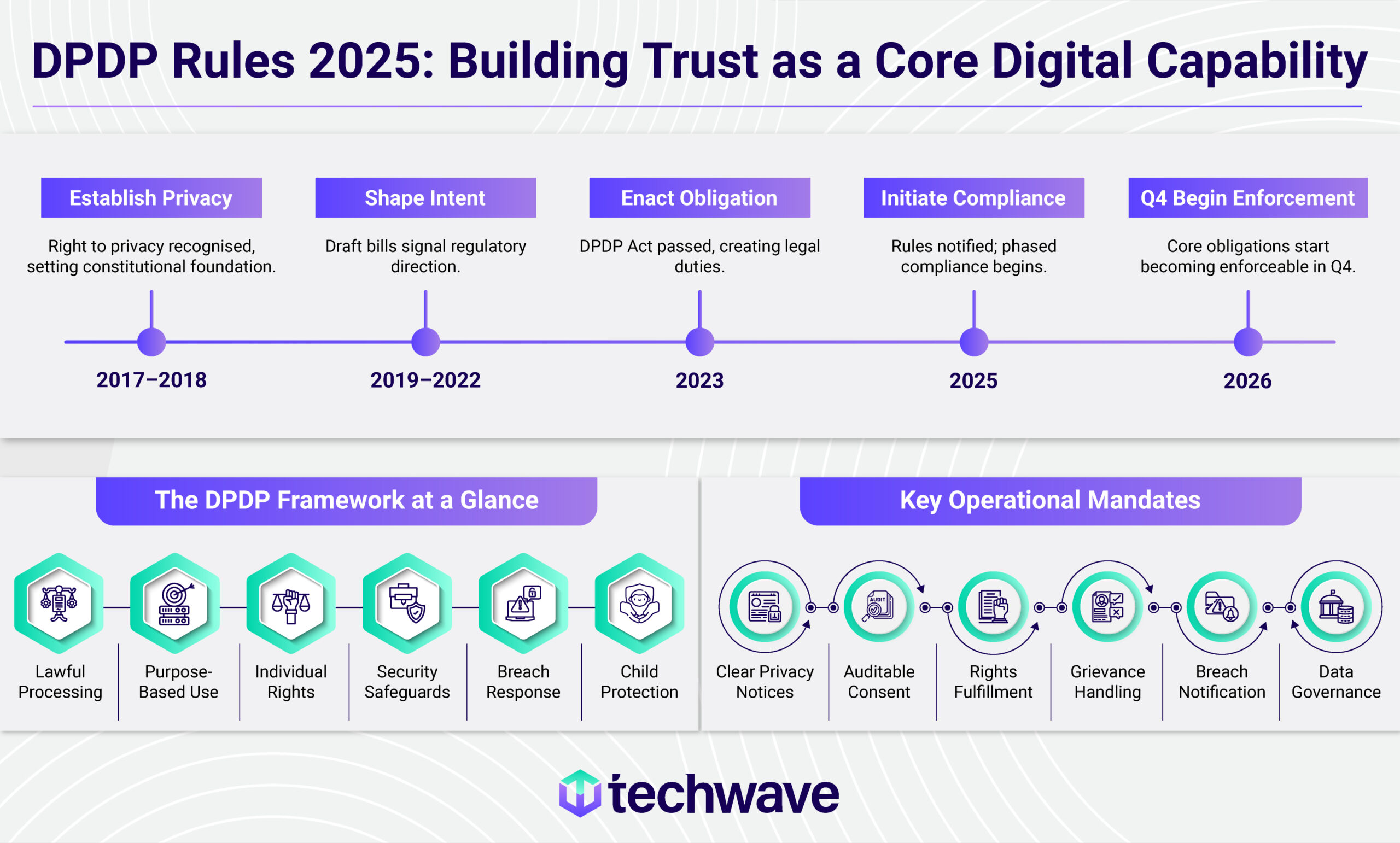
DPDP Act: The Core Rulebook At a Glance
The Digital Personal Data Protection Act, 2023, establishes foundational expectations for the use of personal data in India’s digital ecosystem. It defines what responsible data stewardship looks like in principle and establishes a common baseline across industries, business models, and operational scales.
At its foundation, the Act emphasizes:
- Lawful and transparent processing
- Purpose-based data use
- Data minimization
- Enforceable individual rights
- Appropriate security safeguards
- Clear data breach communication
- Special protection for children’s data
What the DPDP Rules 2025 Mandate
The DPDP Rules give operational shape to these principles. They translate intent into execution by articulating how accountability must be expressed across systems, processes, and organizational decisions. In doing so, they move personal data protection from interpretation to practice.
This includes expectations around:
- Clarity in privacy communication
- Deliberate and auditable consent practices
- Structured rights fulfillment
- Consistent grievance handling
- Demonstrable security safeguards
- Transparent personal data breach response
- Proportionate governance aligned to data impact
By defining how these elements must work together, the Rules create a shared understanding of what effective data stewardship looks like in practice.
Why This Matters for Organizations
Personal data flows through every aspect of modern enterprise. It underpins customer engagement, employee experiences, partner ecosystems, analytics, and emerging technologies such as AI. As these data flows become more interconnected, expectations around transparency, accountability, and explainability increase.
DPDP matters because it aligns these data flows with clearly articulated standards. It reflects a broader shift in how individuals engage with digital services, seeking clarity, choice, and confidence in how their information is used.
For organizations, this creates an opportunity to:
- Strengthen trust across digital touchpoints
- Bring consistency to fragmented data practices
- Align governance with long-term value creation
In this context, data responsibility evolves into a strategic capability. It supports growth, resilience, and credibility, rather than operating as a parallel data compliance exercise.
The Leadership Imperative
Effective personal data protection cannot operate in isolation. It requires coherence across functions, systems, and priorities. The DPDP Rules encourage organizations to treat data governance as an enterprise-wide discipline rather than a standalone activity owned by any single function.
This involves:
- Integrating data governance into core operations
- Aligning legal, technology, and business teams around shared outcomes
- Investing in sustainable data foundations
- Measuring progress through consistency and experience, not only documentation
What Changes for the Business
DPDP shifts focus from policy to practice, making consent journeys intentional and data inventories living maps of information flows. Retention, deletion, security, and rights management follow clear, purpose-driven logic. Vendor accountability deepens, and governance extends across partnerships. The outcome is fluent, scalable data practices that are easier to manage, explain, and trust.
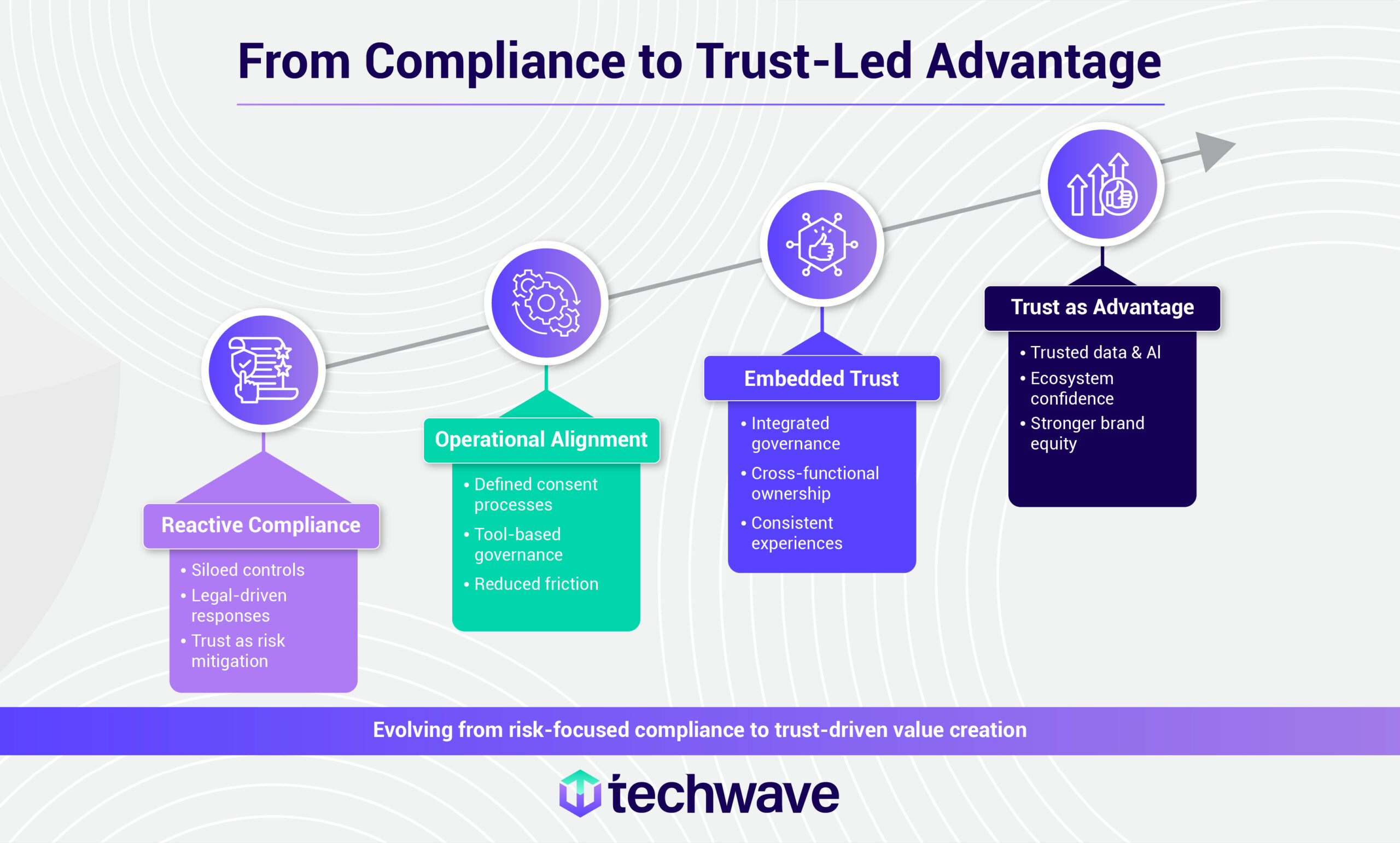
Turning Data Compliance into Advantage
When personal data protection is built into design, it strengthens the entire digital ecosystem. Clear consent improves data quality. Lifecycle discipline reduces noise and operational risk. Strong governance supports responsible analytics and ethical AI adoption. Transparent communication enhances credibility during moments that matter most.
Organizations that adopt DPDP thoughtfully position themselves as responsible, reliable, and future-ready.
A Structured Path Forward
A deliberate approach helps translate intent into execution:
- Understand the data landscape – identify where personal data resides and how it flows
- Design explicit consent and rights journeys – intuitive for users, reliable for operations
- Strengthen security and response readiness – focused on clarity and continuity
- Align vendor governance – reflecting shared responsibility
- Integrate continuous governance – through roles, training, and operational metrics
The Strategic Takeaway
DPDP is not a one-time initiative. It reflects a broader shift in digital expectations and encourages organizations to treat digital trust as infrastructure, designed, maintained, and strengthened over time. When approached with intent, personal data protection supports innovation rather than constraining it. It creates clarity rather than complexity and enables growth that is sustainable, credible, and resilient.